
Digital product engineering has shifted significantly over the last few years, driven by mobile-first adoption, cloud-native architectures, and rapid advancements in artificial intelligence. According to Statista (2025), global mobile app revenues are projected to surpass $613 billion by 2027, highlighting the continued dominance of mobile ecosystems. At the same time, McKinsey (2024) reports that generative AI could contribute up to $4.4 trillion annually to the global economy, largely through productivity improvements and software innovation. Additionally, Gartner (2025) predicts that more than 75% of enterprise-generated data will be created and processed outside traditional data centers, mainly through IoT and edge systems.
These trends show a clear direction: organizations are no longer building isolated digital products. Instead, they are investing in interconnected ecosystems that combine mobile applications, cloud platforms, IoT systems, enterprise CRM tools, and AI-driven intelligence.
Engineering teams like HashStudioz operate in this evolving landscape, delivering full-cycle product engineering that spans Android applications, IoT systems, Salesforce platforms, and generative AI solutions. This integrated approach reflects how modern digital products are designed—connected, intelligent, and data-driven.
Evolution of Digital Product Engineering
Digital engineering has moved through distinct phases:
1. Mobile-First Era
The first phase focused on building standalone mobile applications. Android apps became the primary touchpoint for users, especially in sectors like retail, logistics, and fintech.
2. Cloud and Enterprise Integration Era
Businesses began integrating mobile apps with cloud systems, databases, and enterprise tools like Salesforce. This enabled real-time data synchronization and improved operational visibility.
3. IoT and Connected Systems Era
Devices started generating continuous data streams. An IoT Development Company today focuses on building ecosystems where sensors, devices, and applications communicate seamlessly.
4. AI and Generative Systems Era
The latest phase is defined by intelligence. Generative AI models now assist in content creation, automation, predictive analytics, and even software development itself.
Modern engineering is no longer linear. It is layered, interconnected, and built around data intelligence.
Android Application Development as the Entry Point
Android applications remain the most visible layer of digital ecosystems. They serve as the user interface for complex backend systems.
A well-structured Android app today is not just a front-end tool; it is:
A data collection interface for IoT systems
A customer engagement channel for CRM platforms
A real-time communication layer for AI systems
Engineering teams like HashStudioz design Android applications that integrate directly with backend APIs, cloud services, and enterprise systems such as Salesforce Sales Cloud.
Key engineering considerations include:
Modular architecture (MVVM or Clean Architecture)
API-first design
Offline data handling for low-connectivity environments
Secure authentication using OAuth or JWT
Real-time synchronization with cloud services
This foundation enables businesses to scale their digital presence while preparing for deeper system integration.
IoT Systems: Connecting Physical and Digital Worlds

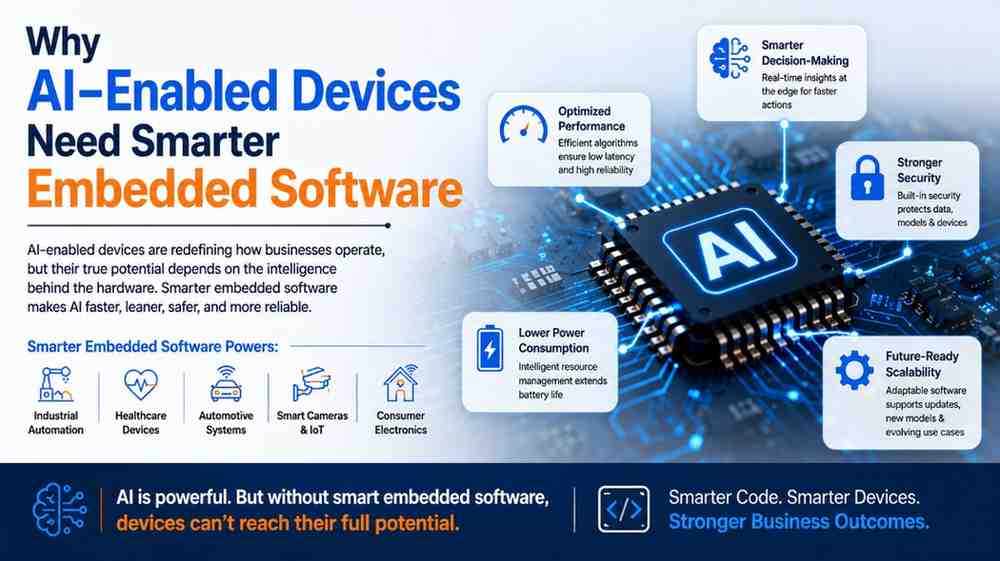
IoT has become a critical layer in modern enterprise architecture. As an IoT Development Company, engineering teams focus on bridging physical devices with cloud-based intelligence systems.
IoT solutions typically include:
Sensor-enabled devices
Edge computing gateways
Cloud ingestion pipelines
Real-time analytics dashboards
For example, in manufacturing, IoT systems monitor machine health, detect anomalies, and trigger maintenance alerts before failures occur. In logistics, IoT tracking improves supply chain visibility by providing real-time shipment data.
The real value of IoT lies not in data collection, but in actionable insights. When IoT systems connect with AI models, businesses can move from reactive operations to predictive decision-making.
Salesforce Sales Cloud Integration for Enterprise Operations
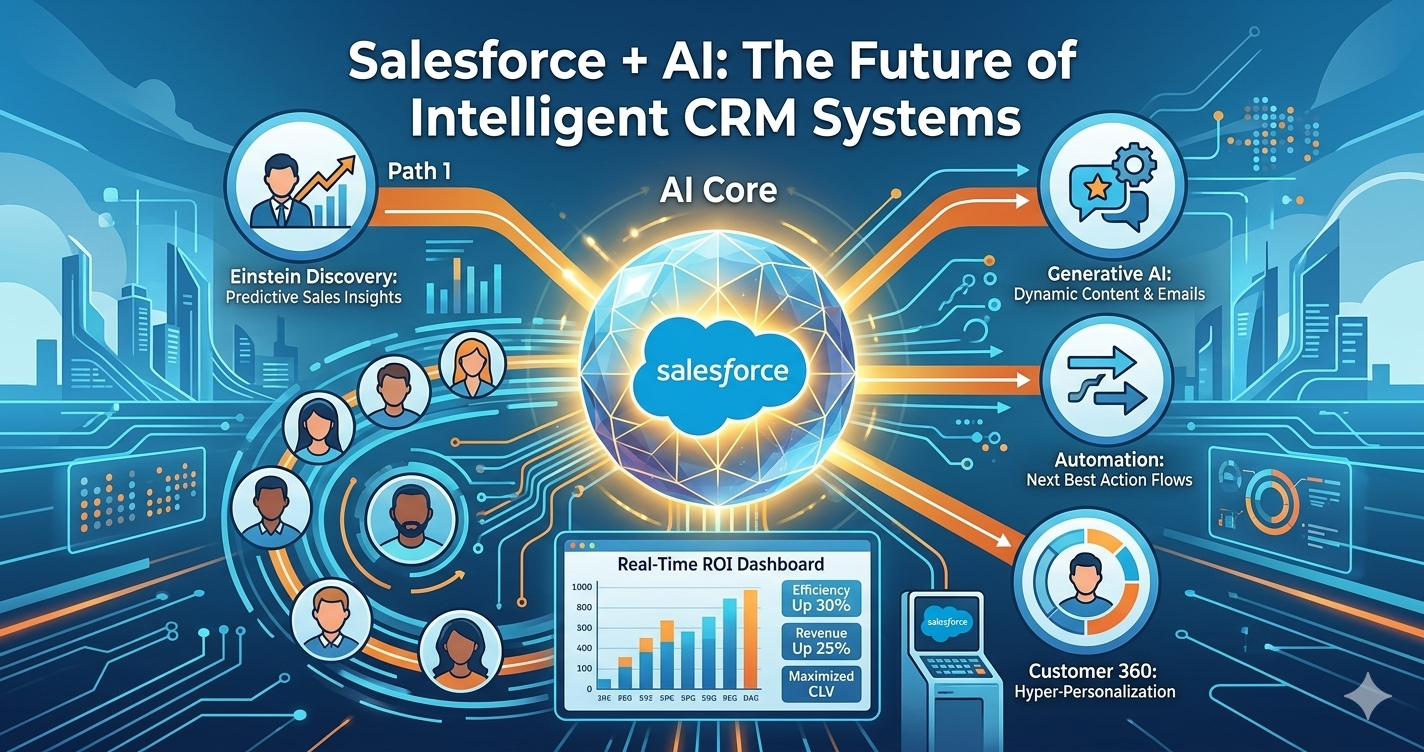
Salesforce Sales Cloud plays a central role in enterprise customer relationship management. It helps organizations manage leads, opportunities, pipelines, and customer engagement workflows.
Modern engineering teams integrate Android apps and IoT systems with Salesforce to create unified business intelligence layers.
Typical integrations include:
Real-time lead updates from mobile applications
Automated customer activity tracking from IoT-enabled products
AI-driven lead scoring models embedded into CRM workflows
This integration ensures that sales teams do not work with fragmented data. Instead, they operate with a 360-degree customer view that updates in real time.
Generative AI: The Intelligence Layer

Generative AI has become a core component of modern product engineering. A Generative Development Company focuses on building systems that generate content, code, insights, and recommendations using advanced machine learning models.
In enterprise systems, generative AI is used for:
Automated report generation from raw business data
Customer support chat automation
Code generation and testing assistance
Personalized marketing content creation
For example, integrating generative AI into a CRM system can help sales teams automatically generate personalized email responses based on customer behavior history.
The key advantage is efficiency. Tasks that previously required manual effort are now completed in seconds with consistent quality.
Real-World Enterprise Example
Consider a logistics enterprise managing thousands of shipments daily across multiple countries.
The company implemented a unified digital ecosystem consisting of:
An Android mobile application for drivers
IoT sensors for shipment tracking
Salesforce Sales Cloud for customer management
A generative AI system for predictive reporting and communication
Workflow Integration:
Drivers update delivery status through the Android app
IoT devices transmit location and environmental data in real time
Salesforce updates customer dashboards automatically
Generative AI creates delay notifications and operational summaries
Outcome:
The system eliminated manual reporting delays and reduced operational bottlenecks significantly. It also improved customer satisfaction by providing accurate, real-time delivery updates.
This type of integrated architecture reflects how modern digital ecosystems operate across industries.
ROI and Business Impact
Organizations adopting end-to-end digital engineering solutions often see measurable improvements in operational efficiency and cost optimization.
Key impact areas include:
30–40% reduction in operational delays through IoT-driven automation
25–35% improvement in sales conversion rates due to real-time CRM insights
20–30% reduction in customer support workload using generative AI systems
Faster product release cycles due to integrated DevOps pipelines
From a financial perspective, businesses benefit from reduced manual overhead, improved decision-making speed, and higher customer retention rates. The combined effect leads to stronger long-term ROI across digital investments.
How End-to-End Engineering Connects Everything
The strength of modern product engineering lies in integration. Android apps, IoT systems, Salesforce platforms, and generative AI models are no longer independent components.
Instead, they form a connected architecture:
Android apps act as the user interface
IoT systems generate real-world data
Salesforce manages enterprise workflows
Generative AI adds intelligence and automation
Engineering teams that operate across all these layers provide businesses with continuity in design, data flow, and system performance.
This is where organizations like HashStudioz position themselves—delivering full-stack digital engineering rather than isolated development services.
Final Thoughts
The transition from Android app development to generative AI systems reflects a broader transformation in how digital products are built. Businesses no longer rely on single-purpose applications. Instead, they invest in interconnected ecosystems that combine mobility, connectivity, enterprise systems, and intelligence.
Technologies like IoT, Salesforce Sales Cloud, and generative AI are not standalone innovations. They function as layers within a larger digital architecture that defines modern enterprise operations.
As organizations continue to evolve, the demand for integrated engineering approaches will grow further. Teams that understand both the technical depth and system-level integration will remain central to this shift in digital product development.


Write a comment ...